
Most rare Smurfs are not rare at all. Schleich, Bully and their licensees turned out hundreds of millions of PVC Smurf figures from 1965 onwards, so the Papa Smurf or Smurfette in your shoebox is almost certainly a common one. Rarity in this hobby comes down to specific variants: a prototype that never went on sale, a paint detail used for a single season, a promotional run for one gas company, or a short run at a factory that closed soon after. This guide lists the figures collectors agree are genuinely scarce, explains how to recognize each one by its stamp, paint and pose, and says plainly when a claim rests on collector reports rather than a catalog.

How to tell if your Smurf is rare
Run your figure through these five checks first. They take a minute and settle most questions about rare Smurfs value on the spot.

- Maker and country stamp. Turn the figure over. A genuine figure carries a Peyo signature, usually a maker mark (Schleich, Bully, or W. Berrie Co. for the American market) and a country: W. Germany, Hong Kong, Portugal, Sri Lanka, Macau or China. The earliest 1960s Schleich figures may carry only "Peyo" on the arm, or nothing. An unmarked figure is either very early or a fake; early paint is soft and matte, fake paint shiny and sloppy.
- Year. The year on the foot is the year the mold was first cut, not the year your figure was made. The regular Boxer Smurf is stamped 1980 but was sold from 1993 to 2000. Treat the date as a mold date and nothing more.
- Paint or color variant. Most rarities on this page are ordinary molds in unusual paint: a red lantern instead of a yellow one, a navy shirt instead of a red one, sauce on a spoon that is usually plain. Fading and repaints mimic variants, so check in daylight that the variant color shows the same wear as the rest of the figure.
- Paint dots and promotional marks. A colored dot on the foot shows where the figure was painted: red for Sri Lanka, yellow or mustard for Portugal, green for Tunisia. Collectors date the dot system to late 1978, so a figure with early marks and no dot may come from the first UK service-station runs. Promotional figures carry a company name or logo (BP, OMO, Shell, McDonald's and others) on the figure or base.
- Condition and completeness. A Super Smurf is only complete with its accessory and, ideally, its box. Once the accessory is lost, a scarce Super Smurf is routinely sold as the common regular figure. Rubs, chewed hats and yellowed white paint matter, because the examples that sell well are the clean ones.

If your figure passes all five and matches an entry below, read the "how to confirm" note before you get excited. Several of these are known only from a catalog photograph or a handful of collector reports.
The rarest Smurf figures
The list runs roughly from figures that never reached the shops to short runs and one-market releases, so the most rare Smurfs come first. Sold ranges are not quoted here: once a figure has been checked against single-figure sales, its range is published in the documented-figures table further down this page, following how we research values. For the regular figures that happen to fetch the highest prices, see the most valuable vintage Smurfs.
Christmas prototype Smurfs, Portugal, mid-1980s
Three Christmas figures, among them a Smurf with a stocking and a flying angel, were made in Portugal with "C 1984 Peyo", Schleich and W. Berrie marks but never went on sale. The usual explanation is that the American licensee dropped them when Smurf sales collapsed in 1985. Cavity numbers on the feet point to a four-cavity mold, so a few exist, but nobody has a count. Their status rests on collector reports and a 1990 club letter, collectors have doubted some eBay examples, and if anything deserves the label extremely rare Smurfs it is these, so treat any offer with caution.

Field Hockey Smurf 20133 prototype
The 1991 collectors club newsletter listed five color variants. Four are green-shirt or white-shirt versions with brown or black shorts. The fifth, red shorts, yellow shirt and white shoes with blue trim, appeared only in the 1981 Wallace Berrie catalog, and the collector who reviewed the figure has never seen one for sale or in a collection. The ordinary versions are common.
2nd Tennis Player Smurf 20093, one-piece Bully mold, 1977
Bully released this all-white tennis figure in 1977 and first cast it with the racket as part of the figure. That one-piece version sold for a short time before the racket became a separate, removable part. Check the feet: one shows "West Germany" in a circle with "Bully" in the center, the other "Peyo". The classic racket is yellow. Schleich made the figure until 1990 and those are common.
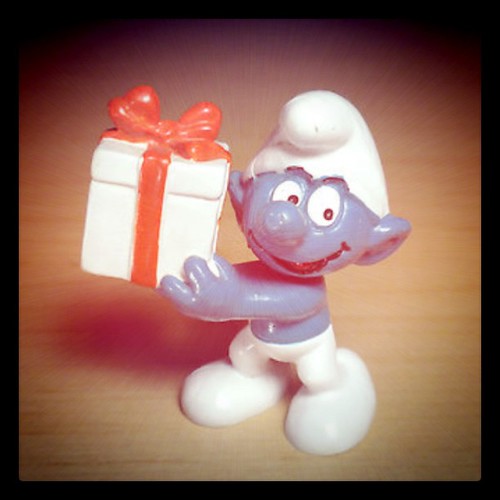
Tennis Smurf 20049 with ball attached, 1979
A different figure from the one above. Schleich's earliest run had a red racket with the ball molded onto the strings in one piece, matching the 1979 catalog; by the 1980 catalog the racket was the solid red removable type everyone owns. Collectors call the ball-attached version the rarest Tennis Smurf; that is consensus, not a catalog note. Because rackets swap between figures, the molded ball is the only reliable tell.
Chef Smurf 20042 with red sauce on the spoon, 1978 to 1979
Schleich's original release had a dab of red sauce on the wooden spoon, a detail that appears to have been painted for only a year or two. The Hong Kong figures sold through BP service stations had a plain brown spoon, and so did the 2011 Decade Display remake. It is a paint detail, so compare the wear on the red against the rest of the figure before paying a premium.
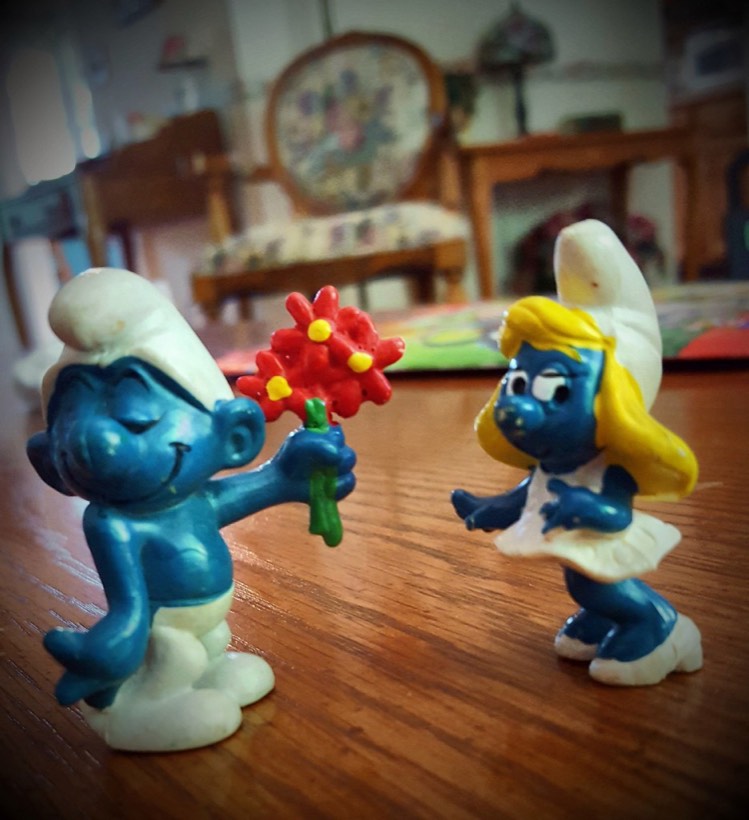
Australian Rules Smurf 20150, navy version, 1980 to 1982
BP Australia sold this figure on a green oval base. The Australian-market version wears a navy top with a white V, white shorts and navy socks, copying Victorian football colors. The red-top version was listed as "Touch Football" in the Wallace Berrie catalog for America. The base is often missing, and collectors say the navy version with its base is the harder find, though nobody has quantified it.
Boxer Super Smurf, BP Australia, early 1980s
The Super Smurf Boxer came with an accessory and was sold through BP in Australia. Once the accessory goes missing it is routinely sold as the regular Boxer Smurf 20419, which Schleich sold from 1993 to 2000 with either "W.Germany" or "Germany" marks. Only the complete Super Smurf is scarce.
1985 Hong Kong limited series, including Tuxedo Smurf and Gown Smurfette
Collectors describe a set of sixteen figures numbered 6590 to 6635, marked "Hong Kong 1985" without an Applause mark and listed in the 1985 Applause dealer catalog as prepacked boxes. They were the last output of the Hong Kong factory before it closed, and some molds moved to Macau and were remarked. The Smurf in a tuxedo and the Smurfette in a gown are reported as the scarcest. Production numbers are unknown.
Basketball Smurf with red shoe stripes, Hong Kong
A small variant that collectors report only on the Hong Kong casting: red stripes on the shoes. Every other version has plain shoes. Collector-reported, with no catalog confirmation.
Pre-dot UK variants, 1977 to 1978
Before paint dots arrived, a handful of figures sold at UK service stations came in colors that were soon replaced: Brainy Smurf 20006 with red glasses, Lantern Smurf 20024 with a red lantern, Striker 20035 with an orange shirt and red ball, Hiker 20041 with a yellow flower, and Postman 20031 with holly on the letter, possibly a Christmas 1979 issue. They have no dot and early Schleich marks, and American collectors describe them as very rare.
Rugby Smurf 20065 in team colors, early 1980s
The standard figure wears a yellow shirt and red shorts. Team kits exist for Wales, England, Scotland, Ireland, France, New Zealand, South Africa and the British Lions, and most were released through the UK National garage promotion; a Five Nations set went on sale in 1981. The British Lions kit, believed to mark the 1980 tour of South Africa, was sold there and is often confused with the Welsh kit. Which kits are scarcest is still debated.
Saver Smurf, National, late 1978
A coin-holding Smurf made for National as a limited edition in late 1978. The promotion was pulled before it reached the forecourts. UK collectors document the figure, but how many survive, if any, is not recorded.
Smurf Collectors Club exclusives: Smurf with Dove and Good Luck Smurf
The club commissioned a handful of figures from Schleich with numbered certificates. The Smurf with Dove, built on the Sitter Smurf 20423 holding a white Schleich fantail dove, was limited to 250. The Good Luck Smurf holding a lucky elephant was limited to 100, fewer than the club had members. Fakes are made by gluing a Schleich miniature animal onto a standard figure, so the certificate matters more than the figure.
Mechanic Smurf 20012 in purple coveralls
The usual Mechanic wears green coveralls and carries a gray wrench; a black-wrench version is a little less common. Purple coveralls with a white shirt are described by collectors as a rare color variation. Collector-reported only.
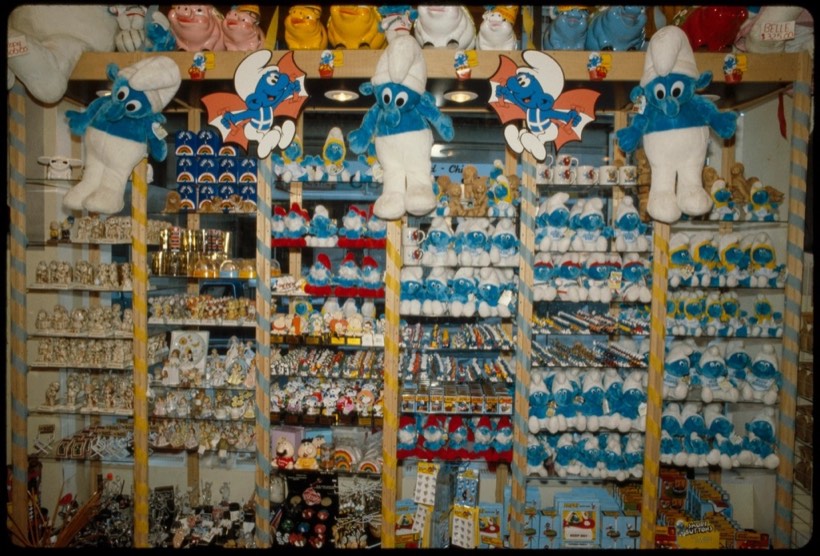
The first Schleich Smurfs, 1965 to 1969
Schleich's PVC line began in 1965 with a Normal, a Gold and a Convict Smurf, then added Spy, Angry and Drummer. Figures from before 1969 often carry only "Peyo" on the arm or no mark at all, and the Normal and Gold share a mold. The scarce ones are these unmarked or Peyo-only castings in clean paint. Since fakes are also unmarked, judge by the soft matte paint and the Schleich emblem used from the late 1960s to 1972.
Schleich's final six, 2025
Best Friends Smurf 20845, Cutie Smurf 20846, Supersmurf 20847, Smurf-fu Smurfette 20848, Pizza Smurf 20849 and Gamer Smurf 20850 were planned for 2024, delayed by production problems, released in February 2025 and sold mainly through the Schleich online store. Collectors report American and Canadian stock gone by May 2025, production stopped early, and the license ending on December 31, 2025. They are new, not vintage, so "rare" is a retailer claim for now. See the Schleich Smurfs guide for the modern range.
| Figure | Maker | Why rare | How to confirm | |
|---|---|---|---|---|
| Christmas prototype Smurfs | Schleich for W. Berrie, Portugal | Never released | Portugal mark, 1984 date, cavity number; collector-reported, fakes exist | |
 | ||||
| Field Hockey Smurf 20133, yellow shirt | Schleich | Prototype in the 1981 Wallace Berrie catalog only | Red shorts, yellow shirt, white shoes with blue trim | |
| 2nd Tennis Player 20093, one-piece | Bully | Short first run, 1977 | Racket molded on; Bully and West Germany on feet | |
| Tennis Smurf 20049, ball attached | Schleich | Early 1979 casting replaced in 1980 | Ball molded onto the strings | |
| Chef Smurf 20042, red sauce | Schleich | Paint detail, about 1978 to 1979 | Red on the spoon with matching wear | |
| Australian Rules Smurf 20150, navy | Schleich for BP Australia | One-market color, 1980 to 1982 | Navy top with white V, green oval base | |
| Boxer Super Smurf | Schleich for BP Australia | Short promotional run, early 1980s | Accessory present; otherwise a common 20419 | |
| 1985 Hong Kong limited series | Schleich for Applause | Last Hong Kong output, small runs | Hong Kong 1985 mark, no Applause mark, numbers 6590 to 6635 | |
| Basketball Smurf, red shoe stripes | Schleich | Hong Kong-only paint variant | Hong Kong mark plus red stripes; collector-reported | |
 | ||||
| Pre-dot UK variants, 1977 to 1978 | Schleich | Early colors replaced within a year | No paint dot, early marks, variant color | |
| Rugby Smurf 20065, team kits | Schleich | UK and South Africa promotions | Kit colors; Lions often mistaken for Wales | |
| Saver Smurf | Schleich for National | Promotion withdrawn, late 1978 | Coin accessory; survivors unverified | |
| Smurf with Dove and Good Luck Smurf | Schleich for the collectors club | Editions of 250 and 100 | Numbered certificate; glued-on animals mean a fake | |
| Mechanic Smurf 20012, purple | Schleich | Color variation | Purple coveralls, white shirt; collector-reported | |
| First Schleich Smurfs, 1965 to 1969 | Schleich | Earliest castings, often unmarked | Peyo on arm or no mark, matte hand paint | |
| Schleich final six, 2025 | Schleich | Short run before the license ended | Numbers 20845 to 20850; too new to call rare | |
Rare doesn't always mean valuable
Scarcity is only half of the price; demand is the other half, and the two drift apart more often than price guides admit. Jubilee Smurfs, a set of nineteen with "1970" in gold on the back of the head, were once prized in America; once eBay connected buyers to German sellers, they turned out to be plentiful. Regional pieces are rare only outside their home market. A prototype is scarce, but if only a few people want it, its price may never show it.
Condition matters more than most finders expect. A rare variant with a chewed hat and faded blue will sell below a clean common figure of the same character, and a Super Smurf without its box or accessory loses most of its premium. Be suspicious, too, of any average that comes from a raw feed of listings: bulk lots, customs, repaints and modern Funko figures all carry the word "rare" in their titles and drag the numbers around. Our price method uses single-figure sales of the exact variant only, with the sale count and the date checked shown on every row.
Where to check current prices
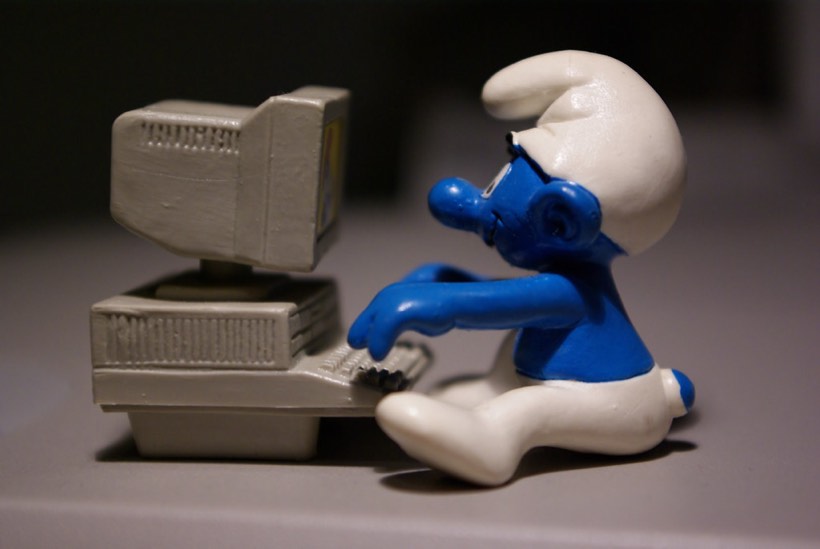
The most useful rare Smurfs price data is free, but you have to filter for it. On eBay, search the catalog number and name together, for example "20049 tennis smurf", then open the filters and tick "Sold items" and "Completed items" so you see what buyers paid rather than what sellers hoped for. Ignore any lot with more than one figure, and open each sale to check the photograph of the feet: a listing that calls a figure rare without showing the stamp has proved nothing. Repeat the search on the UK site, because many figures on this page were sold only in Britain. Once we have checked a figure this way, its range appears in the documented-figures table on this page with the sale count and the date it was checked.
Rare UK Smurfs
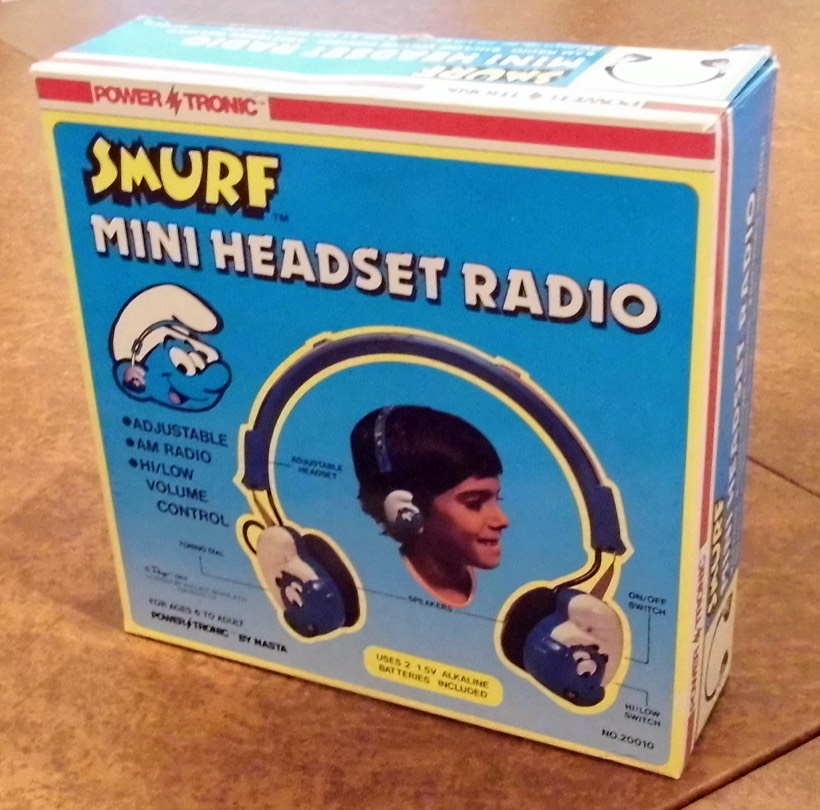
Britain has its own rarities because of the National Benzole promotion. A pilot ran at seven National stations around London from November 1977 to February 1978, the national launch followed on "Smurf Day", May 20, 1978, and by the end of that year thirty figures had been released. Around forty were on sale by early 1980, the Five Nations rugby kits followed in 1981, and the last releases under the BP license came in November 1982. UK-specific scarcities include the pre-dot color variants above, the withdrawn Saver Smurf, and National Super Smurfs still in their UK boxes, which collectors describe as rare. The often-repeated 1978 lead paint scare, in which Hong Kong-made figures were tested and cleared and paint dots followed, is thinly documented, so treat it as background rather than a reason any figure is scarce. For the common British figures of the period, start with our vintage Smurf figures guide, and use the character index to put a name to any figure you cannot place.
Documented figures and values
Sources
- https://www.smurfs.com.au/smurf-figures/smurf-review-20093-2nd-tennis-player-smurf/
- https://www.smurfs.com.au/smurf-figures/smurf-review-20133-field-hockey-smurf/
- https://www.smurfs.com.au/smurf-figures/smurf-review-20150-australian-rules-smurf/
- https://www.smurfs.com.au/smurf-figures/classic-smurf-review-20042-chef-smurf/
- https://www.smurfs.com.au/smurf-figures/smurf-review-20419-boxer-smurf/
- https://www.smurfs.com.au/random-smurf-thoughts/smurf-review-20845-best-friends-smurf/
- https://www.smurfs.com.au/smurfs/2025-new-smurfs-from-schleich/
- https://bluebuddies.com/cgi-bin/ultimatebb.cgi/topic/1/4608.html
- https://bluebuddies.com/cgi-bin/ultimatebb.cgi/topic/1/4580.html
- https://bluebuddies.com/cgi-bin/ultimatebb.cgi/topic/1/1688.html
- https://bluebuddies.com/cgi-bin/ultimatebb.cgi/topic/1/4474.html
- https://bluebuddies.com/cgi-bin/ultimatebb.cgi/topic/1/4727.html
- https://forum.bluecavern.com/viewtopic.php?p=186266
- https://forum.bluecavern.com/viewtopic.php?p=181286
- https://forum.bluecavern.com/viewtopic.php?p=175072
- https://forum.bluecavern.com/viewtopic.php?t=14542
- https://forum.bluecavern.com/viewtopic.php?p=178293
- https://forum.bluecavern.com/viewtopic.php?p=185814
- https://forum.bluecavern.com/viewtopic.php?p=144813
- https://forum.bluecavern.com/viewtopic.php?p=180884
- https://blueimps.com/smurf_markings.html
- https://blueimps.com/smurf_faq.html
- https://www.blueimps.com/smurfs_news13.html
- https://www.thecursedcountry.com/Nationalbenzole.html
- https://en.wikipedia.org/wiki/The_Smurfs_merchandising
- https://www.worldcollectorsnet.com/?p=17807
- https://www.arnesblueheaven.com/smurf/2025-schleich-smurf-set-6/
Editorial draft · Last reviewed 2026-11-04