A Smurf village playset is what most collectors go hunting for once the figures are sorted: the big red-and-white mushroom house, the small cottages, the windmill and farm, and the boxed accessory sets that turn a shelf of PVC Smurf figures into a village. Peyo put the Smurfs in mushroom-shaped houses in a forest clearing that outsiders could not find without a Smurf to lead them, and from the mid-1970s Schleich, Bully and later the American and movie-era licensees turned that village into toys. This guide covers who made the houses, how to tell the versions apart, what the large sets contained, what to check before you buy, and which pieces collectors report as hard to find.

What is the Smurf village?
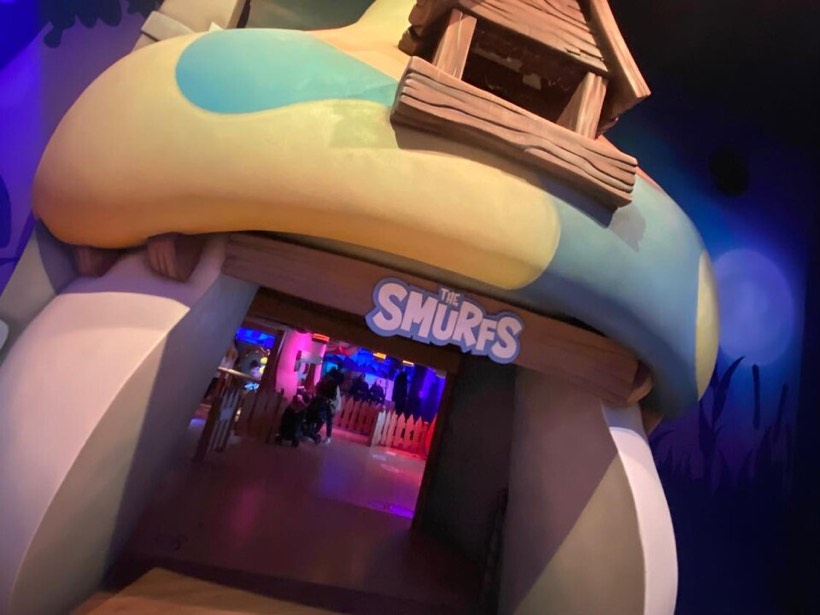
Searching for “Smurf village” turns up three different places. The original is Peyo’s: a hidden clearing of mushroom houses deep in the forest, where the Smurfs live under Papa Smurf and which Gargamel never manages to find for long. It is the setting of nearly every comic, the 1980s cartoon and the films, and it is the place every Smurf house and playset on this page is trying to recreate.
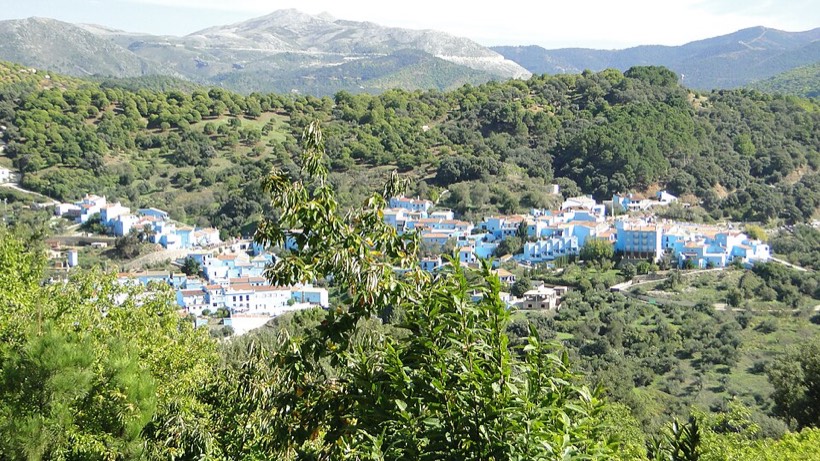

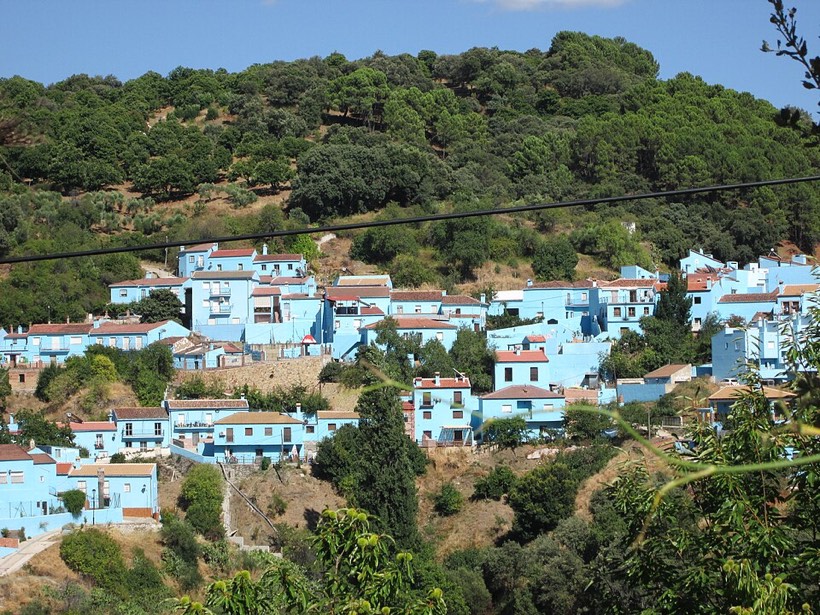
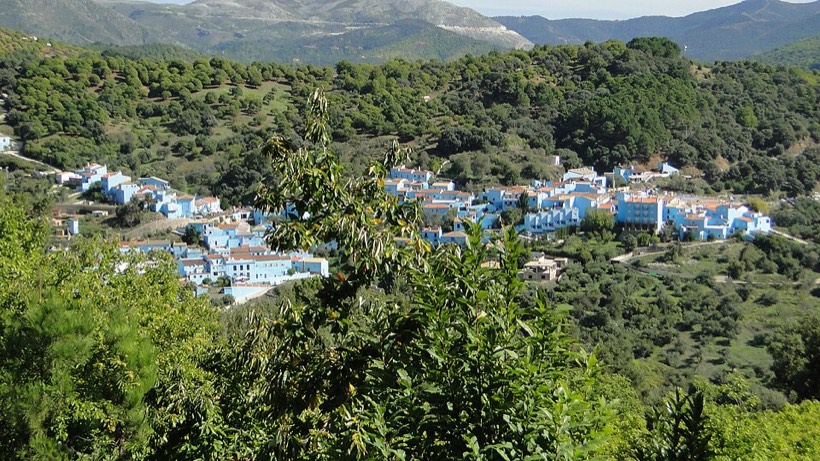
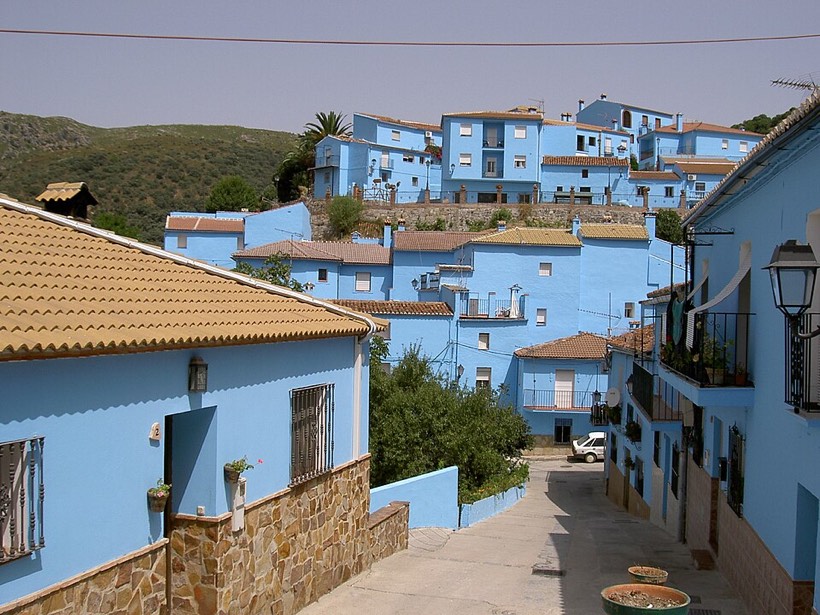
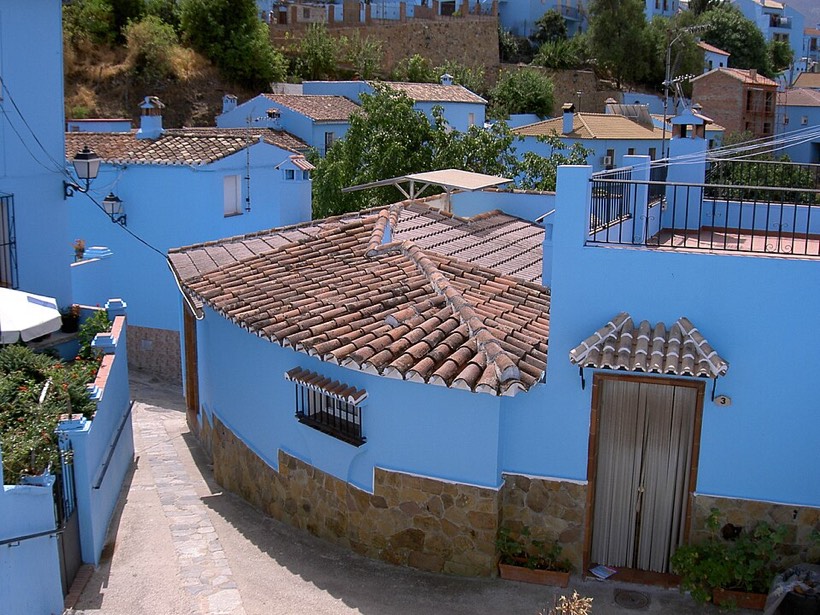
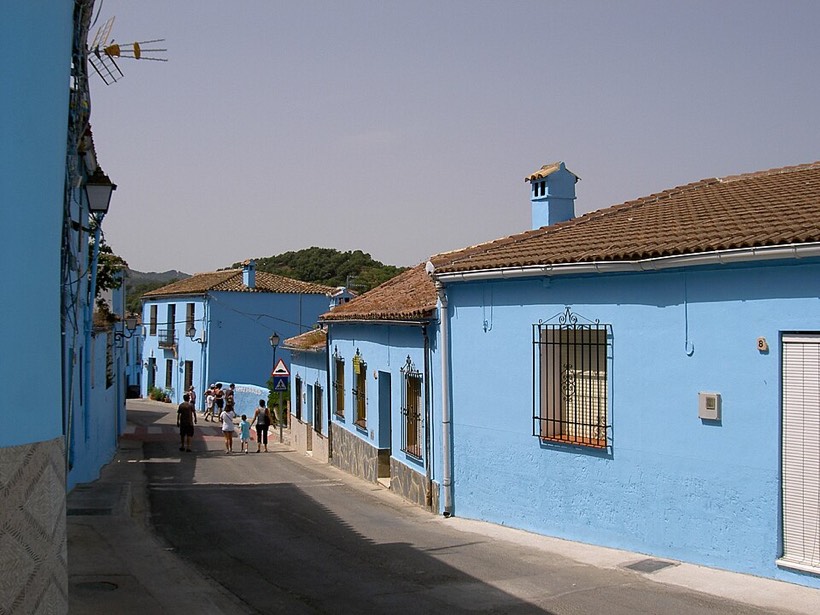
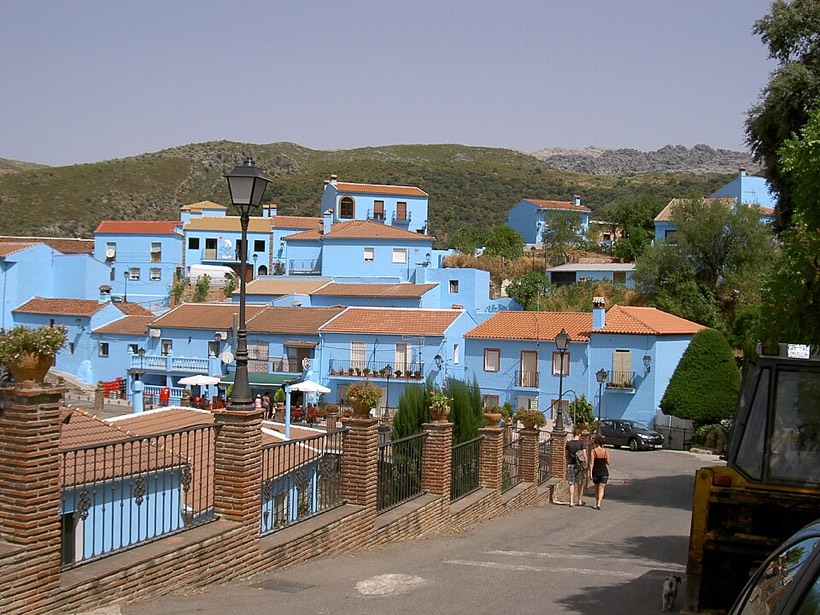
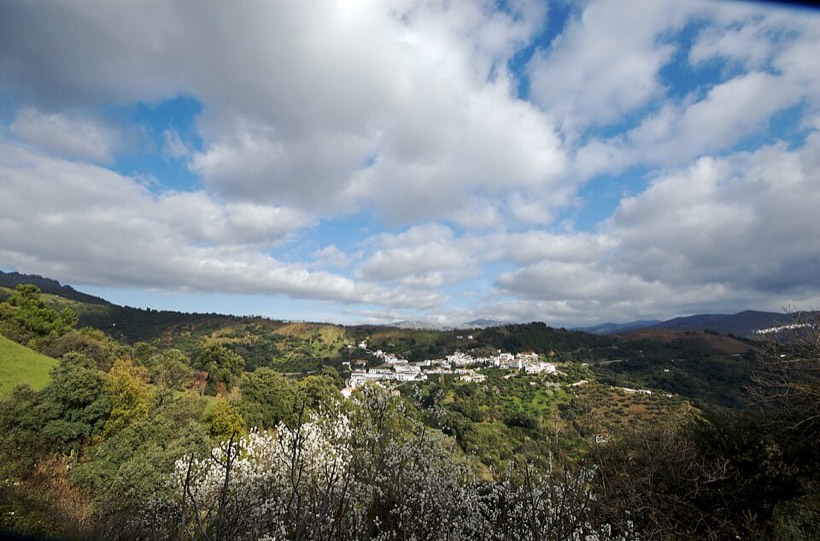
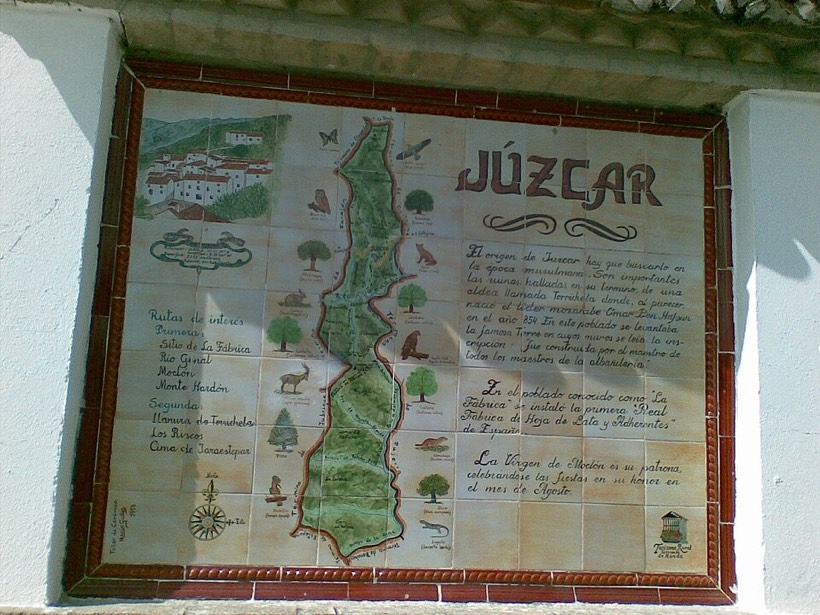
The second is real. In 2011 the Andalusian village of Júzcar, in the hills of Málaga province, was painted blue for the premiere of the first Smurfs film, using around 9,000 litres of paint. The residents liked the tourists who followed and voted to keep the colour. After a royalties dispute in 2017 it lost the right to use the Smurfs name and now calls itself the Aldea Azul, the Blue Village, but the houses are still blue.
The third is Smurfs’ Village, a free-to-play phone game from 2010 in which you rebuild the village after Gargamel wrecks it. If you came here to collect the village in miniature, read on: the rest of this page is about the toy houses, the big village sets and how to tell them apart.
The first Smurf houses: Schleich and Bully in the 1970s
The earliest houses are older than the catalog number most people know. André, the Swedish collector who documents accessories on the Blue Cavern forum, owns two Schleich houses made before Bully took over the German Smurf license in 1974. Both have "Schlumpfhaus" molded into the roof and a Peyo mark on roof and base; the older one is softer and heavier, like tire rubber. He also shows a plainer Schleich house with no Peyo mark, lettered as a Schlumpfhaus or a Zwergenhaus (gnome house) depending on which figures it was sold with. Across these early runs Schleich tidied the windows, stopped gluing the base from two pieces and added a chimney.

Bully, the Spraitbach rival covered on the Schleich Smurfs page, made its own house: a two-story mushroom about 10 inches tall with a green front door that stays open, marked W. Germany, Peyo and Bully underneath. André dates the first Bully house, without the printed roof logo, to 1974 or 1975 and the boxed version to 1977.
The house most people mean by "vintage Smurf house" is Schleich's 40001 Large Mushroom House, which collector catalogs date to 1976. It stands about 9 inches, with a red roof with white spots, green window frames, a door and shutters that open, and a yellow key. The box promised to "recreate the magical Smurf Village in your own home". In 1978 came the small cottages, about 4 inches tall on a white base: 40011 red, 40012 green, 40013 blue and the pink 40014 Smurfette cottage, each with a butterfly clipped to the roof. A 1979 German dealer catalog also lists a large house playset, 40009, with a run of 1977/78 to 1985.
British collectors meet the same house in a different carton: one Blue Cavern member bought a large house in a UK box with "Smurf" in big red letters and a leaflet headed "Smurfs from National", the petrol-station promotion covered in our National Garages Smurfs guide. Hong Kong-printed boxes for the US market are smaller than the German ones and carry W. Berrie article numbers.
Smurf house styles and how to tell them apart

Schleich reissued the same molds in the 1990s under new numbers (49001, 49011, 49013, 49014) and again in 2017 (20803), so the roof shape alone tells you nothing. Colors and fittings do. These are the differences BlueBuddies and the Blue Cavern collectors record.
| House | Number and era | Roof | Base, windows and door | Tell-tale | |
|---|---|---|---|---|---|
| Large mushroom house, original | 40001, 1976 to 1980s | Red with white spots; orange and green roofs reported | White base, green window frames, yellow key | Opening door and shutters; no ladder in the box | |
| Large mushroom house, 1990s | 49001, from 1996 | Red with yellow patches | Brown windows, grey key | Same mold, different paint | |
| Smurf House with two figures | 20803, 2017 | Red with yellow patches | Twenty loose parts: windows, shutters, key | Comes with Papa Smurf and Gargamel with Azrael; different flower colors on the upper window | |
| Small cottages, original | 40011 red, 40012 green, 40013 blue, 1978 | Colored with white spots | White base; grey frame with brown door, or brown frame with grey door | Yellow butterfly | |
 | |||||
| Small cottages, 1990s | 49011 red, 49013 blue | Red and yellow; dark blue and red | Yellow-orange base; light blue base | Red or blue butterfly | |
| Smurfette cottage, original | 40014, 1978 | Pink and purple with white spots | Pink base, purple frames, pink door with curtain and flowers | Purple or pink butterfly | |
| Smurfette cottage, 1990s | 49014 | Purple | Pink base, brown windows and door | Yellow butterfly | |
| Medium "Schlumpf Haus" | Schleich, undated | Red, with a scroll reading Schlumpf House | One version has flowers on the base | The flower version has a chimney; the plain one does not | |
| Bully house | Bully, mid-1970s | Mushroom cap, printed Bully logo on later roofs | Two floors, green door fixed open | Marked W. Germany, Peyo, Bully | |

Base marks follow the same logic as the figures. Early houses carry Peyo on roof and base; later ones add Schleich, a country (W. Germany, then Germany after reunification, or Hong Kong on much US stock) and, from about 1990, a CE mark. André lists three base markings for the Smurfette cottage alone, plus one Hong Kong-made base with a W. Berrie mark. Roofs and bases came from different runs and were swapped in play, so a Hong Kong roof on a W. Germany base is common and is not a factory variant. The marks on the figures themselves are explained on the vintage Smurfs page.
The large village sets: Schleich buildings and playsets

Schleich never sold one boxed village; it sold the village in pieces. Ten numbered accessory sets came first, which collectors still call Playset 1 to 10: 40030 Garden (wheelbarrow, ladder, table, bench and two stools, in brown or green), 40040 Fence, 40050 Gate with lantern and bell, 40060 Mushroom, 40070 Boat with cloth sails, 40080 Petrol station (André places its German debut in 1980), 40090 Well with a working winch, 40100 Snail and cart, 40110 Lift truck and 40120 Conveyor belt, which BlueBuddies describes as quite hard to find.
Above the houses sat three big buildings, each in an older and a newer color scheme. The windmill 40020 has a light grey base and green thatch; the 1990s 49020 a yellow base and brown thatch. The farmhouse 40025 has green thatch and a stork on the roof delivering Baby Smurf; the 49025 switches to brown thatch, red shutters and a grey key. Gargamel's Castle 40027, about 17 inches wide, has blue stones and a yellow-and-brown roof; the 49027 grey stones and a plain yellow roof. A windmill playset numbered 40019 appears in the 1984 Mafi catalog, and in the 1990s the German distributor Bader sold leftover Schleich building boxes under its own stickers.

In 1997 Schleich added four "super playsets" with figures made for them: 40601 Gargamel's Lab, 40602 Smurfette's Bedroom, 40603 Western and 40604 Moon Explorer. Applause had sold the bedroom and moon sets in the United States in 1984; its bedroom has pink-painted furniture and the standard nightgown Smurfette, where the Schleich set has plain furniture and a sitting Smurfette. The 2000s sets 40620 to 40623 (garden, well, snail cart and drum kit) each include a figure.
American village sets of the 1980s
The US boom produced village sets with no Schleich equivalent. Wallace Berrie's Deluxe Play Village, copyright Peyo 1983, packed a 30 by 36 inch vinyl village map with two figures, a Super Smurf car, the fence and gate playsets and a small Schleich house; the same year it licensed cardboard pop-up playsets of the Play Village, a Sports Village and Gargamel's Castle. Lakeside Games' Smurf Play Village of 1981, made in Denmark, was all cardboard, with four houses and 36 punch-out Smurfs on stands. Mattel's Magic Talk line (Smurf Village, Papa Smurf's Lab and Smurfette's House) is the one that confuses attic finders: its hollow figures sit on a clear base and talk, and they are not Schleich PVC, so they will not match the checklists on the character pages.

Movie-era and modern mushroom houses
Play Along Toys, a Jakks Pacific subsidiary since 2004, sold fold-open mushroom houses in green boxes: a blue Smurf house with a bakery, a yellow Papa Smurf house with a grey chimney, and a pink Smurfette house. Jakks followed in 2009 with blue-box versions: a tan Papa Smurf house with a brown chimney, a purple Smurfette house and a green Painter Smurf house. For The Smurfs 2 in 2013 Jakks announced four 7.5-inch Movie Mushroom House playsets, each with a 2.75-inch figure and ten accessories, and for Smurfs: The Lost Village in 2017 it released mushroom houses with Smurfette or Brainy. Schleich's 20803 house with Papa Smurf and Gargamel also dates from 2017. In October 2020 IMPS named Jazwares global master toy partner, with playsets of the mushroom village due from 2022.
What to check before buying a Smurf house

- Count the parts. The large house has a door, shutters, window frames and a key; the 2017 box lists twenty pieces. Cottages need door, frame, windows and butterfly. Buildings need their ladders.
- Do not pay for a ladder. The original 40001 did not come with one. The ladder belongs to the 40030 garden playset; the two are found together so often that sellers assume it is standard.
- Butterflies break and get replaced. They snap at the roof clip. André's rule is that a cottage without a CE mark should have a painted butterfly; unpainted ones are later spares, and the same goes for doors and frames.
- Match roof to base. Different countries on roof and base means a swap, priced as a mixed piece.
- Look for the chimney. Early Schleich houses had none; later roofs and the flower version of the medium house have one, and a snapped stub is easy to miss in a photo.
- Check the whites. White roof spots and cottage bases yellow in sunlight, and touched-up spots are common on 1976 houses: look for paint brighter than the rest of the roof. Our cleaning guide covers what is safe on PVC.
- Price the box separately. German-printed, Hong Kong-printed, UK National and Bader-stickered boxes all exist for the same house, and the box often adds more than the house inside.
Which houses and playsets collectors call scarce

There is no production record for the houses, so everything here is collector-reported, and we say where.
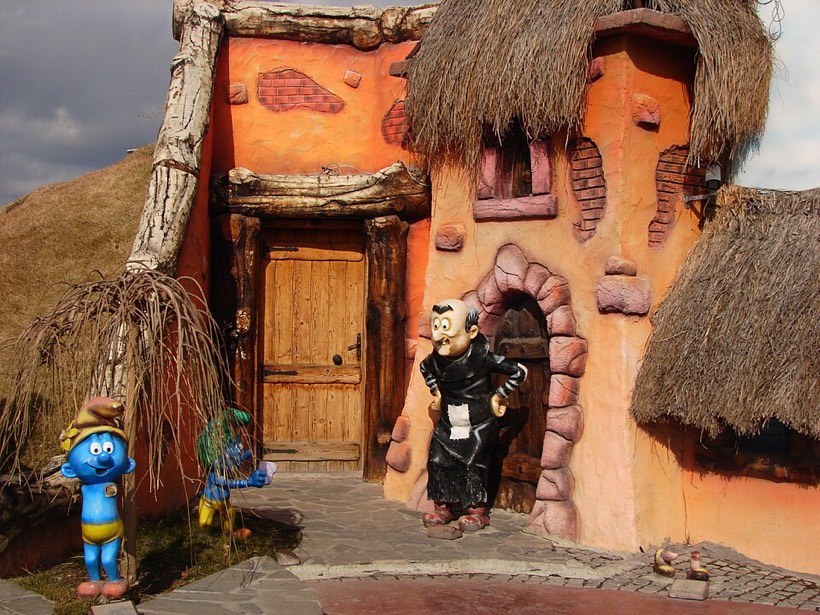
- The Smurf Castle, 4.1005 "Le Chateau des Schtroumpfs". A 9-inch latex castle on a hard base with a painted rock landscape, a cave entrance and two trees, sold by Mafi and Schleich. BlueBuddies calls it the rarest Smurf playset ever.
- Pre-1973 Schleich "Schlumpfhaus" houses with Peyo on roof and base, and the unmarked gnome-house version. André shows them on Blue Cavern; few others have.
- The first Bully house without the printed roof logo, which André could not find for his own collection.
- The 40009 large house playset box. André argues that if it had been used for the whole 1977 to 1985 run, far more would have survived.
- Playset 10, the conveyor belt, and old-color windmills, farms and castles with their boxes.

Collectors on Blue Cavern also note that the buildings have always sold for more than the figures, new and secondhand, so a complete large house is rarely a bargain. Sold ranges for the houses we have photographed are published in the documented-figures table once they have been checked, using the method on the price method page. For the figures that genuinely are scarce, see rare Smurfs.
How houses fit the figure checklist
A house is only as good as the Smurfs standing in it, and several sets came with figures you will not find loose. The 40602 bedroom's sitting Smurfette, the 1997 super-playset figures and the 2017 repaints of Papa Smurf and Gargamel with Azrael are listed on the character pages with their stamps, so a figure from a job lot can be traced back to its set. Date the figures first, using the marks on the Schleich guide, then date the house, and be suspicious of any "complete 1976 set" whose figures carry Germany and CE marks. The table below lists the houses, playsets and set figures we have documented so far.
Documented figures and values
Sources

- https://bluebuddies.com/Smurfs_Smurf_Houses.htm
- https://bluebuddies.com/Smurfs_Smurf_Houses-4.htm
- https://bluebuddies.com/Smurfs_Smurf_Houses-7.htm
- https://bluebuddies.com/Smurfs_Smurf_Houses-10.htm
- https://bluebuddies.com/Smurfs_Smurf_Houses-13.htm
- https://bluebuddies.com/Smurfs_Smurf_Buildings.htm
- https://bluebuddies.com/Smurfs_Smurf_Buildings-4.htm
- https://bluebuddies.com/Smurfs_Smurf_Buildings-7.htm
- https://bluebuddies.com/Smurfs_Smurf_Buildings-10.htm
- https://bluebuddies.com/Smurfs_Smurf_Playsets.htm
- https://bluebuddies.com/Smurfs_Smurf_Playsets-4.htm
- https://bluebuddies.com/Smurfs_Smurf_Playsets-7.htm
- https://bluebuddies.com/Smurfs_Smurf_Playsets-10.htm
- https://bluebuddies.com/Smurfs_Smurf_Playsets-13.htm
- https://bluebuddies.com/Smurfs_Smurf_Playsets-16.htm
- https://bluebuddies.com/Smurfs_Smurf_Playsets-19.htm
- https://bluebuddies.com/Smurfs_Smurf_Playsets-22.htm
- https://bluebuddies.com/Smurfs_Smurf_Playsets-25.htm
- https://bluebuddies.com/Smurfs_Smurf_Playsets-28.htm
- https://bluebuddies.com/Smurfs_Smurf_Playsets-31.htm
- https://bluebuddies.com/Smurfs_Smurf_Toys-10.htm
- https://bluebuddies.com/Smurfs_Smurf_Toys-13.htm
- https://bluebuddies.com/Smurfs_Smurf_Toys-16.htm
- https://bluebuddies.com/cgi-bin/ultimatebb.cgi/topic/1/4826.html
- https://bluebuddies.com/cgi-bin/ultimatebb.cgi/topic/1/3462.html
- https://bluebuddies.com/cgi-bin/ultimatebb.cgi/topic/1/2693.html
- https://bluebuddies.com/cgi-bin/ultimatebb.cgi/topic/1/2417.html
- https://bluebuddies.com/cgi-bin/ultimatebb.cgi/topic/1/3521.html
- https://forum.bluecavern.com/viewtopic.php?p=161622
- https://forum.bluecavern.com/viewtopic.php?p=146220
- https://forum.bluecavern.com/viewtopic.php?p=143209
- https://forum.bluecavern.com/viewtopic.php?p=177334
- https://forum.bluecavern.com/viewtopic.php?p=161763
- https://forum.bluecavern.com/viewtopic.php?p=179770
- https://forum.bluecavern.com/viewtopic.php?p=186427
- https://toybook.com/?p=53428
- https://kidscreen.com/?p=66235
- https://licensinginternational.org/?p=44220
- https://en.wikipedia.org/wiki/Jakks_Pacific
- https://en.wikipedia.org/wiki/The_Smurfs
- https://en.wikipedia.org/wiki/The_Smurfs_merchandising
- https://en.wikipedia.org/wiki/Bullyland
- https://www.thelocal.es/20170807/smurfs-evicted-from-spains-blue-smurf-village-in-row-over-loyalties
- https://www.atlasobscura.com/articles/9230
Editorial draft · Last reviewed 2026-11-04